
REINHARDT, V
Abstract
Refinement techniques were developed for caged research rhesus macaques(Macaca mulatta) in order to better foster the animals' behavioral health and well-being. Individuals were transferred from the traditional barren single-cages to compatible pair-housing arrangements in double-cages furnished with perches, gnawing sticks and custom-made food puzzles. These changes offered them species-appropriate stimuli necessary for the expression of basic species-typical behavioral patterns. Rather than applying the conventional forced restraint methods, the animals were trained to co-operate during common procedures. The refinement techniques were inexpensive and safe; they fostered the animals' behavioral health and eliminated distress responses during data collection, thereby improving research methodology.
Key words: Refinement, Housing, Pairing, Handling, Training, Enrichment, Animal Welfare, Methodology, Macaques
Introduction
Laboratory rhesus macaques (Macaca mulatta) are conventionally being housed and handled in ways that are not conducive to their well-being and behavioral health.
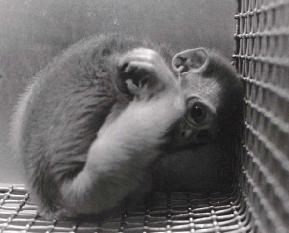
- Single-housing in barren cages is the norm (NATIONAL INSTITUTES OF HEALTH, 1991; REINHARDT, 1994a) in spite of the fact that macaques - like all other intelligent and social animals - need species-appropriate environmental and social stimulation to develop in species-typical manner and experience a state of well-being (cf., MASON, 1991; NOVAK & SUOMI, 1991; SCHAPIRO et al., 1994). Scientists were reluctant to keep the animals in a social environment, because it was hypothesized that adult macaques are more likely to fight than to coexist peacefully (LINE et al., 1990). A monkey housed in an empty cage, however, is literally a behavioral cripple because s/he is chronically deprived of appropriate stimuli for the expression of species-typical behavior patterns. It is difficult to know objectively if a monkey experiences boredom when being kept in an unstimulating environment. However, many such animals show signs of depression and/or engage in gross behavioral disorders such as self-mutilation (Fig. 1; LINE et al., 1990;BERNSTEIN, 1991; BAYNE et al., 1995; JORGENSEN et al., 1996; NIEMAYER etal., 1996). This strongly suggests that, indeed, they suffer in similar ways as humans do when being imprisoned in an empty cell.
- Mechanically or manually restraining and/or immobilizing rhesus macaques during procedures is commonly condoned or recommended because it is believed that the animals are unpredictable, viciously aggressive creatures who pose a life threatening risk to the handling personnel (ACKERLEY & STONES, 1969; INTERNATIONAL ASSOCIATION OF MICROBIOLOGICAL SOCIETIES, 1969; ALTMAN, 1970; WHITNEY et al., 1973; ROBBINS et al., 1986; WOLFENSOHN & LLOYD, 1994; FOWLER, 1995). However, it is acknowledged at the same time that, despite such rigorous precautions bites and scratches are common VALERIO et al., 1969; KLEIN & MURRAY, 1995; ZAKARIA et al., 1996).
While working as a clinical veterinarian and ethologist at the Wisconsin Regional Primate Research Center from 1984 to 1994, 1 questioned the wisdom of keeping macaques alone in barren cages and forcefully restraining them during procedures. I was guided by the following reasoning:
- Investigators have a legal, professional and ethical obligation to provide their animals with humane housing and handling conditions (ANIMAL WELFARE INSTITUTE, 1979; EUROPEAN ECONOMIC UNION, 1986; PRENTICE et al.,1986; PRIMATE RESEARCH INSTITUTE OF KYOTO UNIVERSITY, 1986; ZIMMERMANN,1987; HOME OFFICE, 1989; INTERNATIONAL PRIMATOLOGICAL SOCIETY, 1989; UNITED STATES DEPARTMENT OF AGRICULTURE, 1991; CANADIAN COUNCIL ON ANIMAL CARE,1993; SPAETH, 1994; NATIONAL RESEARCH COUNCIL, 1996).
- Data collected from monkeys who are not able to express basic species-typical behavior patterns - such as interacting with another primate, foraging and perching - have little scientific weight because they are not species representative. A behaviorally deprived macaque may perhaps be termed Macaca experimental is but not Macaca fascicularisor M. mulatta (BLUM, 1994).
- Monkeys suffer from distress when they are forcefully restrained during procedures. Data collected from such animals are of ambiguous scientific value because they are contaminated by the subject's multiple distress responses ranging from significant elevations of serum cortisol concentrations to an inhibition of reproduction (reviews: KLEIN & MURRAY 1995; REINHARDTet al., 1995a). Minimizing or avoiding such responses automatically improves scientific methodology by diminishing the variability of data which, in turn, reduces the number of animals required in a given research protocol (RUSSELL & BURCH, 1959; DENENBERG, 1976; FOX, 1986; ERB, 1990; MORTON,1990; BROCKWAY et al., 1993; LINGEMAN, 1996; STOKES, 1997).
What can be done to provide caged rhesus macaques species-appropriate stimulation for the expression of species-typical behaviors?
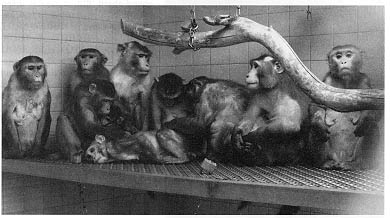
In the wild, macaques live in coherent troops. Housing them in groups rather than in single cages would, therefore, be the ideal way to account for their social disposition (Fig. 2). The risk of aggression, however, is substantial when new groups are formed from singly caged animals (review: REINHARDT, 1991a). The risk of aggression remains high even in established groups (WAGENEN, 1950; CHANCE et al., 1977; ERWIN, 1977; KESSLER et al.,1985; EHARDT & BERNSTEIN, 1986; SAMUELS & HENRICKSON, 1983; REINHARDTet al., 1987a; ROLLAND et al., 1991) because of the spatial limitations set by confinement and the instability of social relationships resulting from research and husbandry stipulations (e.g., removal of individuals for experimental surgery, genetically matched breeding, metabolic studies,terminal studies, medical treatment).
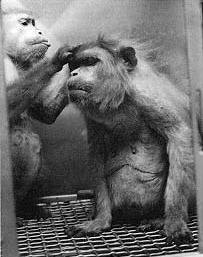
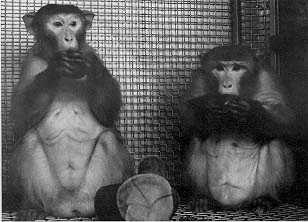
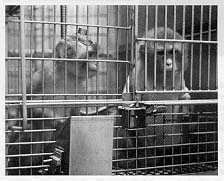
Pair-housing offers a safe, practicable and inexpensive alternative to group-housing. Successful isosexual pair formation and subsequent permanent pair-housing techniques of previously single-caged adult females and adult males have been documented: Individuals can be transferred without special risk from solitary-housing to permanent pair-housing arrangements if the two partners are first given the opportunity to establish a clear dominance-subordination relationship during a brief non-contact familiarization period (partners separated by a grated panel; REINHARDT et al., 1987b). When the two are introduced to each other thereafter in a different cage (to avoid territorial antagonism and/or aggressive disputes triggered by familiar cage neighbors from across the aisle; REINHARDT et al., 1988) they will respect each other's relative rank status and express their social disposition by hugging and/or grooming each other rather than fighting over dominance (Fig. 3; REINHARDT, 1988,1989a). Newly introduced cage mates are compatible in 80-90% of cases, in both female/female and male/male pairs (REINHARDT,1989a,1994b). Pair compatibility is usually long-lasting and has been traced in many cases over periods of three years and longer (Fig. 4; EATON etal., 1994; REINHARDT, 1994b,c).
The rhesus pair-formation technique has been applied with equal success in stump-tailed macaques of both sexes (Macaca arctoides; REINHARDT,1994c) and in male long-tailed macaques (crab-eating, cynomolgus;M. fascicularis; LYNCH, 1997).
Paired monkeys need twice the minimum floor space of the single-caged individual to enable them to show aggression-buffering distancing behaviors during potential situations of conflict. Double cages can readily be created by interconnecting adjacent cages with short tunnels (Fig. 5) or by linking neighboring cages by the removal of side panels or dividing panels of double modules (HEATH, 1989; REINHARDT et al., 1991a; BELLINGER et al., 1992).The installation of a privacy panel is recommended to give the animalsthe option of temporary visual seclusion (Fig. 6; REINHARDT & REINHARDT,1991). Male pairs must be kept in male-only areas to avoid sexual agonistic competition possibly triggered by the sight of females (REINHARDT, 1992a).
New pairs should live together continuously for at least one month to allow them establish a stable social relationship. If partners have tobe separated thereafter, it is good advice to make sure that they can keep continual visual and auditory contact in order to minimize the stress associated with separation. Most studies requiring separation can be accomplished in such a way that companions are separated in their familiar homecage with a grated cage-dividing panel during the critical experimental phase (e.g., 12- h feces/urine collection; 12-h food intake studies) and re-united during the remainder of the time. If the two cage mates have to be housed in different rooms for more than one week, they should not be simply re-united in their home-cage thereafter, but first given the opportunity to briefly recognize each other across a temporary transparent cage divider so that they will not treat each other as strangers, ready to fight over dominance.
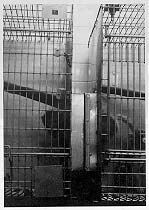
Figure 5: A double cage can easily be created for pairs by inter connecting two adjacent cages with a short tunnel.
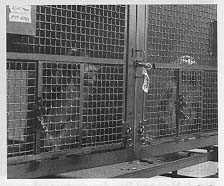
Figure 6: A privacy panel (with passage hole close to the back wall of the cage) gives paired companions the option of visual seclusion, particularly during feeding time.
In facilities with breeding colonies, pair-housing can also be safely accomplished by transferring surplus, naturally weaned 12-18 months old infants to singly caged adults of both sexes; no prior familiarization of the adult and young is necessary (REINHARDT et al., 1987c). Pair compatibility is about 85 %, both in female/infant and in male/infant dyads (REINHARDTet al., 1987d). It has been confirmed in many cases over periods of more than three years (REINHARDT et al., 1989b; REINHARDT, 1994b).
Keeping macaques in pairs rather than in individual cages:
- allows them to actively express their need for social contact and social interactions (Fig. 3);
- does not jeopardize their well-being and health (review: REINHARDTet al., 1995b);
- cures individuals from gross behavioral disorders attendant to single-caging (review: REINHARDT et al., 1995b);
- does not interfere with routine husbandry procedures and common research protocols (Fig. 7; REINHARDT et al. 1989a b; REINHARDT, 1991b).
The presence of a compatible conspecific also serves as buffer against fear-inducing situations that the singly caged subject is lacking (BOVARD,1959; MASON, 1960; EPLEY, 1974; STANTON et al., 1985; DE MONTE et al.,1992; GUST et al., 1994; DETTMER, 1995; MENDOZA &. CAPITANIO, 1995). A companion is undoubtedly the best remedy against boredom (cf., WOLFLE,1987; SEGAL, 1989; BRAMBLETT, 1989; LINE et al., 1990; NOVAK & SUOMI,1991; WAAL, 1991; SCHAPIRO et al., 1996). Species-appropriate distraction, how ever, can also be provided by increasing the complexity of cage space with perches. Such elevated structures no longer restrict the animals to an unnatural, permanent terrestrial life style but open up the vertical dimension there by permitting them to perform arboreal activities such as climbing, leaping, balancing, bouncing, perching and looking-out,and natural, i.e., vertical flight responses (Fig. 8). Inexpensive, monkey-adequate perches can readily be made from branches of dead deciduous trees or sectionsof polyvinyl chloride (PVC) pipes. The diameter of a perch must be large enough so that an animal can comfortably sit on it over extended periods of time. Macaques are inquisitive animals who want to know what's going on outside of their cage. Therefore, perches should always be installed in such a way that they enable the occupant(s) to sit right in front of the cage (Fig. 8). Simple installation techniques have been described for standard and squeeze-back cages (SCHMIDT et al., 1989; REINHARDT et al.,1991a; REINHARDT, 1992b). Swings are less suitable than perches to enhance cage space complexity for macaques. When given the choice, adult animals clearly prefer perches over swings, presumably because perches, unlike swings, are fixed structures permitting continuous relaxed postures rather than short-term balancing (KOPECKY & REINHARDT, 1991). The situations may be different with juvenile animals who are more exuberant in their locomotor expressions.
Structural enhancement of the vertical dimension is particularly important for animals who are confined in lower-row cages, and hence forced to continuously live close to the ground in the shade of upper-row cages, with no vertical escape route (REINHARDT, 1989b). These individuals have a definitive disadvantage in comparison with those living in relatively bright upper-row cages. Ideally, macaques should not be kept in stacked cages, but all cages should extend from floor to ceiling of the room thus taking maximum advantage of the space and allowing the installation of 'escape perches' above human eye level (cf., INTERNATIONAL PRIMATOLOGICAL SOCIETY, 1993), and providing optimal conditions for uniform illumination of all animals in a room.
Emulating the gathering aspects of natural feeding is another effective strategy to counteract boredom in the captive environment where plenty of food is freely available. Rhesus macaques have a strong drive to forage and will readily 'work' for food in the presence of freely accessible food (REINHARDT, 1994d). Placing the chow on the mesh ceiling of the cage rather than in feeder boxes or on the floor is perhaps the easiest, yet one of the most effective ways to promote foraging behavior. This enrichment technique requires no extra personnel time, no extra material and no special food. It also keeps the floor clean from left-overs, because the animals only work for food that they actually eat. Rhesus macaques increase their cumulative foraging time more than 50-fold when their daily standard biscuit ration is placed on the mesh ceiling rather than in ordinary feeder boxes(REINHARDT, 1993a). The same effect can be achieved when the feeder box is remounted a few centimeters away from its access hole (REINHARDT, 1993b). Dexterity is now required to maneuver the biscuits through the mesh covering the face of the box (Fig. 9). The custom-made food puzzle has been applied with the same success in stump-tailed macaques (REINHARDT, 1993c).
Gnawing sticks offer an additional inexpensive option of inanimate cage enrichment (CHAMPOUX et al., 1987). The sticks consist of 12-30 cm long branch segments which are placed into the cages without any attachment.The opportunity to manipulate and gnaw a chewable natural object not only counteracts lack of stimulation but is likely to also benefit the animals' dental health (Fig. 10). Due to gradual wear and progressive dehydration, the sticks continuously change their texture and configuration thereby retaining a quasi novelty effect. After several months, they usually become so small that they have to be replaced.
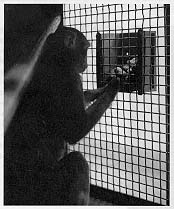
Figure 9: The ordinary food box can easily be converted into a food puzzle by remounting it away from the access hole. Duke requires a cumulative total of about 45 minutes to retrieve his standard biscuit ration from the food puzzle but only about 0. 3 minutes to retrieve it from the ordinary freely accessible food box (REINHARDT, 1993c).
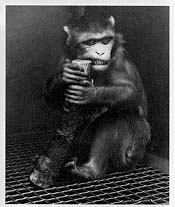
Figure 10: Circle engrossed with a gnawing stick. Singly caged rhesus macaques actively use their gnawing stick about 4% of the day (REINHARDT 1989b; LINE & MORGAN, 1991).
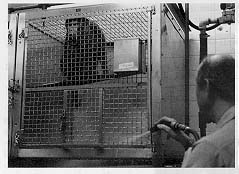
The attending personnel is probably the most important environmental enrichment factor for caged macaques. Direct and indirect interactions with the caretaker, technician, veterinarian or with the investigator offer strong stimuli which, however, can be either positive or negative dependent on the personnel's demeanor and character (ARLUKE & SANDERS, 1996). It cannot be over emphasized how critical the role of personnel is in determining the animals' well-being, and hence their 'quality' as research subjects(cf., WOLFLE, 1987; HEATH, 1988; HOME OFFICE, 1989; SCOTT, 1990; REESE,1991; POOLE, 1995). The macho-type person is out of place in the animal room because s/he triggers stress or even distress reactions (cf., ARLUKE& SANDERS, 1996). Typically, the animals will freak out and hide in a back corner of the cage when such a person comes into their room. In sharp contrast to this, the kind person will be welcomed when entering the room and the animals will come right up to the front of their cages.
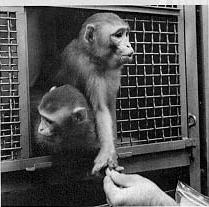
In order to establish and foster positive, tension-free relationships attending personnel should be encouraged to give their animals individual names rather than using identification codes (cf., ARLUKE, 1988; REESE,1991; SCOTT, 1991; FOUTS, 1995) and spend regular enrichment-time periods gently talking to them and offering them food treats (Fig. 11; cf, WOLFLE,1987).
What can be done to avoid data-biasing stress responses of rhesus macaques during handling procedures?
Monkeys are not aggressive creatures, but they may become aggressive in self-defense when they are unskillfully approached and treated. Anybody who lacks a basic understanding of their behavioral needs and/or is fearful should not be permitted to work with macaques. Such a person not only puts herself but also the animal subject into avoidable jeopardy.
Rhesus macaques are intelligent and sensitive animals who, with patience, confidence, trust, gentle firmness and positive reinforcement, can be trained to co-operate during common procedures such as capture, blood collection and systemic drug application (REINHARDT, 1992c,d, 1996a). The training challenges the animals' intelligence, offers them - and the caretaker -some valuable distraction, eliminates distress responses, and avoids possibly dangerous defensive reactions triggered by fear (REINHARDT et al., 1990,1991b; REINHARDT, 1992d; cf., REICHARD & LAULE, 1993).'Even' male rhesus macaques who have the reputation of being particularly aggressive and hence intractable require, on average, less than a cumulative total of 45 minutesto learn to voluntarily present a leg (REINHARDT, 1991c), and show no resistance and no physiological stress reaction during subsequent blood collection (REINHARDT et al., 1991). Working with rather than against the handlingperson gives the monkey some control over the interaction and makes enforced restraint superfluous (Figs. 12,13). Many of the accidental bite and scratch injuries associated with macaque handling could be avoided by training techniques that draw on the animal's inherent learning capabilities and willingness to co-operate during procedures. A co-operating macaque has simply no reason to bite or scratch.
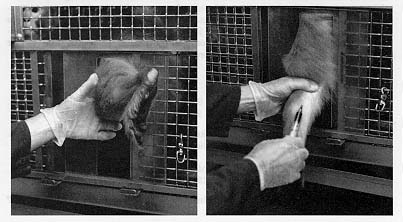
Figure 12: Twist, an adult malerhesus macaque, was trained within a cumulative total time of 29 minutes to voluntarily present a leg (REINHARDT, 1991c) ....
Figure 13: .... and co-operate during blood collection without showing a rise in serum cortisol concentration (REINHARDT et al., 1991b). (From: Lab Animal 1996, 25; with permission of the Editor).
Census and Conclusion
The above outlined refinement techniques are successfully implemented at the Wisconsin Regional Primate Research Center (WRPRC). At a census conducted in March 1994, the rhesus macaque colony of the WRPRC comprised 728 caged animals.
- 92 % of them lived in compatible pairs,
- 93 % of them had access to one or two perches,
- 99 % of them had access to one or two gnawing sticks,
- 71 % of them received their daily food ration on the mesh-ceiling orin custom-made food puzzles,
- 99 % of them experienced daily positive human interactions,
- 88 % of them co-operated during capture,
- 7 % of them co-operated during in-home cage blood collection,
- 8 % of them co-operated during in-home cage injection.
The various refinements of housing and handling are simple and inexpensive and have proven to be safe (REINHARDT, 1992e,1993d,1994e,f,1996). They benefit not only the individual animal who is housed and treated with more consideration of his or her behavioral and emotional needs, but they also benefit the investigator who has the assurance that the data collected from his/her research animals are not unnecessarily confounded by macaque-inadequate housing and handling conditions. There is no scientific, veterinary or financial justification for not providing rhesus macaques a more species-appropriate environment than the barren single cage, and for not training them to co-operate during procedures.
References
ACKERLEY, E.T. and STONES, P.B.: Safety procedures for handling monkeys. Laboratory Animal Handbooks (1969) 4: 207-2 11.
ALTMAN, N.H.: 1970. Restraint of monkeys in clinical examination and treatment. Journal of the American Veterinary Medical Association (1970)159: 1222.
ANIMAL WELFARE INSTITUTE: Comfortable Quarters for Laboratory Animals. Washington: Animal Welfare Institute (1979).
ARLUKE, A.B.: Sacrificial symbolism in animal experimentation: Objector pet? Anthrozoos (1988) 2: 98-117.
ARLUKE, A. and SANDERS, C.R.: Regarding Animals. Philadelphia: Temple University Press (1996).
BAYNE, K., HAINES, M., DEXTER, S., WOODMAN, D. and EVANS, C.: Nonhuman primate wounding prevalence: A retrospective analysis. Lab Animal (1995)24(4): 40-44.
BAYNE, K.A.L., HURST, J.K. and DEXTER, S.L.: Evaluation of the preference to and behavioral effects of an enriched environment on male rhesus monkeys. Laboratory Animal Science (1992) 42: 38-45.
BELLINGER, L.L., HILL, E.G. and WIGGS, R.B.: Inexpensive modifications to nonhuman primate cages that allow social grouping. Contemporary Topics(1992) 31(3):10-12.
BERNSTEIN, I.S.: Social housing of monkeys and apes: Group formations. Laboratory Animal Science (1991) 41: 329-333.
BLUM, D.: The Monkey Wars. New York: Oxford University Press (1994).
BOVARD, E.W.: The effects of social stimuli on response to stress. The Psychological Review (1959) 66: 267-277.
BRAMBLETT, C.: 1989. Mental well-being in anthropoids. In: SEGAL, E.F.(ed.): Housing, Care and Psychological Wellbeing of Captive and LaboratoryPrimates. Park Ridge: Noyes Publications (1989): 1-11.
BROCKWAY, B.R, HASSLER, C.R. and HICKS, N.: Minimizing stress duringphysiological monitoring. In: NIEMI, S.M. and WILLSON, J.E. (eds.): Refinementand Reduction in Animal Testing. Bethesda: Scientists Center for AnimalWelfare (1993): 56-69.
CANADIAN COUNCIL ON ANIMAL CARE: Guide to the Care and Use of ExperimentalAnimals, Volume 1 (2nd Edition). Ottawa: Canadian Council on Animal Care(1993).
CHAMPOUX, M., HEMPEL, M. and REINHARDT, V: Environmental enrichmentwith sticks for singly-caged adult rhesus monkeys. Laboratory Primate Newsletter(1987) 26(4):5-7.
CHANCE, R.M.A., EMORY, G.R. and PAYNE, R.G.: Status referents in long-tailedmacaques (Macaca fascicularis): Precursors and effects of a femalerebellion. Primates (1977) 18: 611-632.
DENENBERG, VH.: Statistics and Experimental Design for Behavioral andBiological Researchers. Washington: Hemisphere Publishing (1976).
DETTMER, E.L.: The relationship between social support, reactivity,and immune competence in juvenile rhesus macaques (Macaca mulatta).American Journal of Primatology (1995) 36: 120.
EATON, G.G., KELLEY, S.T., AXTHELM, M.K., ILIFF-SIZEMORE, S.A. and SHIIGI,S.M.: Psychological well-being in paired adult female rhesus (Macacamulatta). American Journal of Primatology (1994) 33: 89-99.
EHARDT, C.A. and BERNSTEIN, I.S.: Matrilineal overthrows in rhesus monkey groups. International Journal of Primatology (1986) 7: 157-181.
EPLEY, S.W.: Reduction of the behavioral effects of aversive stimulationby the presence of companions. Psychological Bulletin (1974) 81: 271-283.
ERB, H.: A statistical approach for calculating the minimum number ofanimals needed in research. ILAR (Institute of Laboratory Animal Resources)News (1990) 32(l):11-16.
ERWIN, J.: Factors influencing aggressive behavior and risk of traumain pigtail macaque (Macaca nemestrina). Laboratory Animal Science(1977) 27: 541-547.
EUROPEAN ECONOMIC COMMUNITY: Council Directive 86/609 on the Approximationof Laws, Regulations, and Administrative Provisions Regarding the Protectionof Animals Used of Experimental and Other Scientific Purposes. OfficialJournal of the European Communities (1986) L358.
FOUTS, R.: Arrogance of knowledge versus humility of ignorance. In:NORTON, B.G., HUTCHINS, M., STEVENS, E. and MAPLE, T.L. (eds.): Ethicson the Ark. Zoos, Animal Welfare, and Wildlife Conservation. Washington:Smithsonian Institution Press (1995): 277-285.
FOWLER, M.E.: Restraint and Handling of Wild and Domestic Animals. SecondEdition. Ames: Iowa State University Press (1995).
FOX, M.W.: Laboratory Animal Husbandry. Ethology, Welfare and ExperimentalVariables. Albany: State University of New York Press (1986).
GUST, D.A., GORDON T.R, BRODIE, A.R. and McCLURE, H.M.: Effect of apreferred companion in modulating stress in adult female rhesus monkeys.Physiology & Behavior (1994) 55: 681- 684.
HEATH, M.: The training of cynomolgus monkeys and how the human/animalrelationship improves with environmental and mental enrichment. AnimalTechnology (1989) 40: 11-22.
HOME OFFICE: Animals (Scientific Procedures) Act 1986. Code of Practicefor the Housing and Care of Animals Used in Scientific Procedures. London:Her Majesty's Stationery Office (1989).
INTERNATIONAL ASSOCIATION OF MICROBIOLOGICAL SOCIETIES: Proposed procedurefor the housing and handling of simians to decrease the transmission ofdisease to man. Laboratory Animal Handbooks (1969) 4: 255-266.
INTERNATIONAL PRIMATOLOGICAL SOCIETY. International guidelines for theacquisition, care and breeding of nonhuman primates. Primate Report (1989)25: 327.
INTERNATIONAL PRIMATOLOGICAL SOCIETY. International guidelines for theacquisition, care and breeding of nonhuman primates, Codes of Practice1-3. Primate Report (1993) 35: 3-29.
JORGENSEN, M.J, NOVAK, M.A., KINSEY, J., TIEFENBACHER, S. and MEYER,J.: Correlates of self-injurious behavior in monkeys. International PrimatologicalSociety/American Society of Primatologists Congress Abstracts (1996) No.767.
KESSLER, M.J., LONDON, WT., RAWLINS, R.G., GONZALES, J., MARTINES, H.S.and SANCHES, J.: Management of a harem breeding colony of rhesus monkeysto reduce trauma-related morbidity and mortality. Journal of Medical Primatology(1985) 14: 91-98.
KLEIN, H.J. and MURRAY, K.A.: Restraint. In: BENNETT, B.T., ABEE, C.R.AND HENRICKSON, R. (eds.): Nonhuman Primates in Biomedical Research. Biologyand Management. New York: Academic Press (1995): 286-297.
KOPECKY, J. and REINHARDT, V: Comparing the effectiveness of PVC swingsversus PVC perches as environmental enrichment objects for caged femalerhesus macaques. Laboratory Primate Newsletter (1991) 30(2): 5-6.
LINE, S.W. and MORGAN, K.N. The effects of two novel objects on thebehavior of singly caged adult rhesus macaques. Laboratory Animal Science(1991) 41: 365-369.
LINE, S.W., MORGAN, K.N., MARKOWITZ, H., ROBERTS, J. and RIDDELL, M.:Behavioral responses of female long-tailed macaques (Macaca fascicularis)to pair formation. Laboratory Primate Newsletter (1990) 29(4): 1-5.
LINGEMAN, C.H.: Trends in animal use in U.S. biomedical laboratories.In vitro Toxicology (1996) 9: 19-42.
LYNCH, R.: Successful pair-housing of male cynomolgus monkeys. Lab Animal(1997) 26(5): in press.
MASON, W.A.: Socially mediated reduction in emotional responses of young rhesus monkeys. Journal of Abnormal and Social Psychology (1960) 60: 100-104.
MASON, WA.: Effects of social interaction on well-being: development aspects. Laboratory Animal Science (1991) 41: 323-328.
MENDOZA, S.R and CAPITANIO, J.P.: Effects of daily social experienceon the pituitary-adrenal and leukocyte response to dexamethason and chair restraint. American Journal of Primatology (1995) 36: 143.
MONTE, M. DE, ANDERSON, J.R. and CHARBONNIER, H.: Self-aggression in stumptail macaques: Effects of frustration and social partners. Primates(1992) 33: 115-120.
MORTON, D.B.: 1990. Adverse effects in animals and their relevance torefining scientific procedures. ALTERNATIVES TO LABORATORY ANIMALS (ATLA)(1990) 18: 29-39.
NATIONAL INSTITUTES OF HEALTH: Nonhuman Primate Management Plan. Bethesda: Office of Animal Care and Use NIH (1991).
NATIONAL RESEARCH COUNCIL: Guide for the Care and Use of Laboratory Animals (7th Edition) Washington: National Academy Press (1996).
NIEMEYER, C., EATON, G.G. and KELLEY, S.T.: Improving the psychological well-being of nonhuman primates by providing appropriate therapeutic devices. International Primatological Society/American Society of Primatologists Congress Abstracts (1996): No. 678.
NOVAK, M.A. and SUOMI, S.J.: Social interaction in nonhuman primates: An underlying theme for primate research. Laboratory Animal Science (1991)41: 308314.
POOLE, T.: The welfare of laboratory animals. In: TUFFERY, A.A. (ed.): Laboratory Animals - An Introduction for Experimenters, Second Edition. New York: John Wiley & Sons (1995): 25-36.
PRENTICE, E.D., ZUCKER, I.H. and JAMETON, A.: Ethics of animal welfarein research: The institution's attempt to achieve appropriate social balance. The Physiologist (1986) 29: 1&19-21.
PRIMATE RESEARCH INSTITUTE OF KYOTO UNIVERSITY: Guide of the Care and Use of Laboratory Primates. Kyoto: University of Kyoto (1986).
REESE, E.R: The role of husbandry in promoting the welfare of laboratory animals. In: HENDRIKSEN, C.F.M. and KOTER, H.B.WM.: Animals in Biomedical Research. Amsterdam: Elsevier (1991): 155-192.
REICHARD, T. and LAULE, G.: Behavioral training of primates and other zoo animals for veterinary procedures. Proceedings American Association of Zoo Veterinarians (1993): 65-69.
REINHARDT, V: Preliminary comments on pairing unfamiliar adult malerhesus monkeys for the purpose of environmental enrichment. Laboratory Primate Newsletter (1988) 27 (4): 1-3.
REINHARDT, V: Behavioral responses of unrelated adult male rhesus monkeys familiarized and paired for the purpose of environmental enrichment. American Journal of Primatology (1989a) 17: 243-248.
REINHARDT, V: Evaluation of the long-term effectiveness of two environmental enrichment objects for singly caged rhesus macaques. Lab Animal (1989b)18(6): 31-33.
REINHARDT, V: Time budget of caged rhesus monkeys exposed to a companion, a PVC perch, and a piece of wood for an extended time. American Journalof Primatology (1990) 20: 51-56.
REINHARDT, V: Group formation of previously single-caged adult rhesus macaques for the purpose of environmental enrichment. Journal of Experimental Animal Science (1991a) 34: 110-115.
REINHARDT, V. An environmental enrichment program for caged rhesus monkeys at the Wisconsin Regional Primate Research Center. In: NOVAK, M.A.and PETTO, A.J. (eds.): Through the Looking Glass. Issues of Psychological Well-being in Captive Nonhuman Primates. Washington: American Psychological Association. (1991b): 149-159.
REINHARDT, V: Training adult male rhesus monkeys to actively cooperate during in-homecage venipuncture. Animal Technology (1991c) 42: 11-17.
REINHARDT, V: Avoiding aggression during and after pair formation of adult rhesus macaques. Laboratory Primate Newsletter (1992a) 31(3): 10-11.
REINHARDT, V: Improving the microenvironment of caged laboratory macaques. Animal Technology (1992b) 43: 179-183.
REINHARDT, V: Transport-cage training of caged rhesus macaques. Animal Technology (1992c) 43: 57-61.
REINHARDT, V: Improved handling of experimental rhesus monkeys. In: DAVIS, H. and BALFOUR, D. (eds.): The Inevitable Bond. Examining Scientist-Animal Interactions. Cambridge: Cambridge University Press (1992d).
REINHARDT, V: Effective, safe and inexpensive environmental enrichmentand improved handling of research rhesus macaques. In: KRULISCH, V (ed.): Implementation Strategies for Research Animal Well-Being: Institutional Compliance with Regulations. Bethesda: Scientists Center for Animal Welfare and Wards (1992e): 121-126.
REINHARDT, V: Using the mesh ceiling as a food puzzle to encourage foraging behaviour in caged rhesus macaque (Macaca mulatta). Animal Welfare(1993a) 2: 165-172.
REINHARDT, V: Enticing nonhuman primates to forage for their standard biscuit ration. Zoo Biology (1993b) 12: 307-312.
REINHARDT, V: Promoting increased foraging behavior in caged stump-tailed macaques. Folia Primatologica (1993c) 61: 47-51).
REINHARDT, V: Evaluation of an inexpensive custom-made food puzzle usedas primary feeder for pair-housed rhesus macaques. Laboratory Primate Newsletter(1993d) 32(3): 7-8.
REINHARDT, V: Survey of environmental enhancement for research macaques. Laboratory Primate Newsletter (1994a) 33(3): 1-2.
REINHARDT, V: Pair-housing rather than single-housing for laboratory rhesus macaques. Journal of Medical Primatology (1994b) 23: 426-431.
REINHARDT, V: Social enrichment for previously single-caged stumptail macaques. Animal Technology (1994c) 5: 37-41.
REINHARDT, V: Caged rhesus macaques voluntarily work for ordinary food. Primates (1994d) 35: 95-98.
REINHARDT, V: Continuous pair-housing of caged Macaca mulatta: Risk evaluation. Laboratory Primate Newsletter (1994e) 33(l): 1-4.
REINHARDT, V: Safe pair formation technique for previously single-cagedrhesus macaques. In Touch (1994f) 1(3): 5-6.
REINHARDT, V.: Institutionalizing pair-housing of adult Macaca mulattaat a research facility. Contemporary Topics (1995) 34(2): 44.
REINHARDT, V: Refining the blood collection procedure for macaques. Lab Animal (1996a) 25(l): 32- 35.
REINHARDT, V,: The Wisconsin Gnawing Stick. Animal Welfare Information Center Newsletter (1996b) 7(3-4): 11-12.
REINHARDT, V and HURWITZ, S.: Evaluation of social enrichment for aged rhesus macaques. Animal Technology (1993) 44: 53-57.
REINHARDT, V and REINHARDT, A.: Impact of a privacy panel on the behavior of caged female rhesus monkeys living in pairs. Journal of Experimental Animal Science (1991) 34: 55-58.
REINHARDT, V, REINHARDT, A., EISELE, S., HOUSER, D. and WOLF, J.: Controlof excessive aggressive disturbance in a heterogeneous troop of rhesus monkeys. Applied Animal Behaviour Science (1987a) 18: 371-377.
REINHARDT, V., COWLEY, D., EISELE, S., VERTEIN, R. and HOUSER, D.: Preliminary comments on pairing unfamiliar adult female rhesus monkeys for the purposeof environmental enrichment. Laboratory Primate Newsletter (1987b) 26(2):5-8.
REINHARDT, V, EISELE, S. and HOUSER, D.: Leben in den Käfig bringen.Sozialisierung bislang einzeln gehaltener Rhesusaffen. Alternativen zu Tierexperimenten (1987c) 7: 45-50.
REINHARDT, V, HOUSER, W.D., EISELE, S.G. and CHAMPOUX, M.: Social enrichment with infants of the environment for singly caged adult rhesus monkeys.Zoo Biology (1987d) 6: 365-371.
REINHARDT, V, HOUSER, W, EISELE, S., COWLEY, D. and VERTEIN, R.: Behaviorresponses of unrelated rhesus monkey females paired for the purpose of environmental enrichment. American Journal of Primatology (1988) 14: 135-140.
REINHARDT, V, HOUSER, D. and EISELE, S.: Pairing previously singly caged rhesus monkeys does not interfere with common research protocols. Laboratory Animal Science (1989a) 39: 73-74.
REINHARDT, V, HOUSER, D., COWLEY, D., EISELE, S. and VERTEIN, R.: Alternatives to single caging of rhesus monkeys (Macaca mulatta) used in research. Zeitschrift für Versuchstierkunde (1989b) 32: 275-279.
REINHARDT, V, COWLEY, D., SCHEFFLER, J., VERTEIN, R. and WEGNER, F.:Cortisol response of female rhesus monkeys to venipuncture in home cage versus venipuncture in restraint apparatus. Journal of Medical Primatology(1990) 19: 601-606.
REINHARDT, V, PAPE, R. and ZWEIFEL, D.: Mulitifunctional cage for macaqueshoused in pairs or in small groups. American Association for Laboratory Animal Science Bulletin (1991a) 30(5): 14-15.
REINHARDT, V, COWLEY, D., EISELE, S. and SCHEFFLER, J.: Avoiding unduecortisol responses to venipuncture in adult male rhesus macaques. Animal Technology (1991b) 42: 83-86.
REINHARDT, V., LISS, C. and STEVENS, C.: Restraint methods of laboratory nonhuman primates: A critical review. Animal Welfare (1995a) 4: 221-238.
REINHARDT, V, LISS, C. and STEVENS, C. Social-housing of previously single-caged macaques: What are the options and the risks? Animal Welfare(1995b) 4: 307-328.
ROBBINS, D.O., ZWICK, H., LEEDY, M. and STEARNS, G.: Acute restraint device for rhesus monkeys. Laboratory Animal Science (1986) 36: 68-70.
ROLLAND, R.M.: A prescription for psychological well-being. In: NOVAK,M.A. and PETTO, A.J. (eds.): Through the Looking Glass. Issues of Psychological Well-being in Captive Nonhuman Primates. Washington: American Psychological Association. (1991):129-134.
RUSSELL, WM.S. and BURCH, R.L.: The Principles of Humane Experimental Techniques. London: Methuen & Co. (1959).
SAMUELS, A. and HENRICKSON RV 1983 Outbreak of severe aggression incaptive Macaca mulatta. American Journal of Primatology (1983) 5:277-281.
SCHAPIRO, S.J., BLOOMSMITH, M.A., PORTER, L.M. and SUAREZ, SA.: Enrichment effects on rhesus monkeys successively housed singly, in pairs, and ingroups. Applied Animal Behaviour Science (1996) 48: 158-172.
SCHAPIRO, S.J., LEE-PARRITZ, D.E., TAYLOR, L.L., WATSON, L., BLOOMSMITH,M.A. and PETTO, A.: Behavioral management of specific pathogen-freerhesus macaques: Group formation, reproduction, and parental competence. Laboratory Animal Science (1994) 44: 229-234.
SCHMIDT, E.M., DOLD, G.M. and MCINTOSH, J.S.: A perch for primate squeeze cages. Laboratory Animal Science (1989) 39: 166-167.
SCOTT, L.: Training non-human primates - Meeting their behavioural needs. In: Animal Training. Potters Bar: Universities Federation for Animal Welfare(1990): 129-133.
SCOTT, L.: 1991 Environmental enrichment for single housed common marmosets.In: BOX, H.O. (ed.): Primate Responses to Environmental Change. London: Chapman & Hall (1991): 266-274.
SEGAL, E.F.: Preface. In: SEGAL, E.F. (ed.): Housing, Care and PsychologicalWellbeing of Captive and Laboratory Primates. Park Ridge: Noyes Publications(1989): vii-xv.
SPAETH, G.L.: Editorial: Caring for animals, caring for ourselves. Ophthalmic Surgery (1994) 25: 426.
STANTON, M.E., PATTERSON, J.M. and LEVINE. S.: Social influences onconditioned cortisol secretion in the squirrel monkey. Psychoneuroendocrinology(1985) 10: 125-134.
STOKES, o: Animal use alternatives in research an testing: Obligation and opportunity. Lab Animal (1997) 26(3): 28-32.
UNITED STATES DEPARTMENT OF AGRICULTURE: Title 9, CFR (Code of Federal Register), Part 3. Animal Welfare; Standards; Final Rule. Federal Register(1991) 56: 6426-6505.
VALERIO, D.A., MILLER, R.L., INNES, J.R.M., COURTNEY, K.D., PALLOTTA,A.J. and GUTTMACHER, R.M.: Macaca mulatta Management of a Laboratory Breeding Colony. New York: Academic Press (1969).
WAAL, F.B.M. DE.: The social nature of primates. In: NOVAK, M.A. andPETTO, A.J. (eds.): Through the Looking Glass. Issues of Psychological Well-being in Captive Nonhuman Primates. Washington: American Psychological Association. (1991): 6777.
WAGENEN, G, VAN: 1950 The monkeys. In: FARRIS, E.J. (ed.): The Careand Breeding of Laboratory Animals. New York: John Wiley (1950): 1-42.
WHITNEY, R.A., JOHNSON, D.J. and COLE, W.C.: Laboratory Primate Handbook. New York: Academic Press (1973).
WOLFENSOHN, S. and LLOYD, M.: Handbook of Laboratory Animal Management and Welfare. New York: Oxford University Press (1994).
WOLFLE, T.L.: Control of stress using non-drug approaches. Journal ofthe American Veterinary Medical Association (1987) 191: 1219-1221.
ZAKARIA, M., LERCHE, N.W, CHOMEL, B.B. and KASS, R: Accidental injuries associated with nonhuman primate exposure at two regional primate researchcenters (U.S.A.): 1988-1993. Laboratory Animal Science (1996) 46: 298-304.
ZIMMERMAN, M.: Editorial: Ethical principles for the maintenance and use of animals in neuroscience research. Neuroscience Letters (1987) 73: 1.
Author's address:
Animal Welfare Institute, 4605 Crescent Road, Madison, WI 53711, USA
Primate Report, vol. 49, 1997; p. 93-112.
This article has been reproduced with permission of the publisher.